Grand v. University Heights

⚖️ LIVE STATUS: U.S. Supreme Court has requested a response from University Heights  ·  No. 25-965  ·  View Docket →

U.S. Supreme Court · Religious Freedom · RLUIPA

He Wanted to Pray.
The City Said No.

No American needs permission to pray in his own home.

An Orthodox Jew. A small prayer group in his living room. A government cease-and-desist. Now before the United States Supreme Court.

Read the Story View Court Documents
𝕏 Share on X Share on Facebook
10 Men in a Prayer Group
1 Cease & Desist Letter
U.S. DOJ Filed Brief in Support
SCOTUS Petition for Certiorari

Featured Coverage

Cleveland 19 News — "University Heights man accuses city, mayor of violating his civil rights and religious rights" · Sep 2022

The Story

A Prayer Group. A Hostile City. A Constitutional Fight.

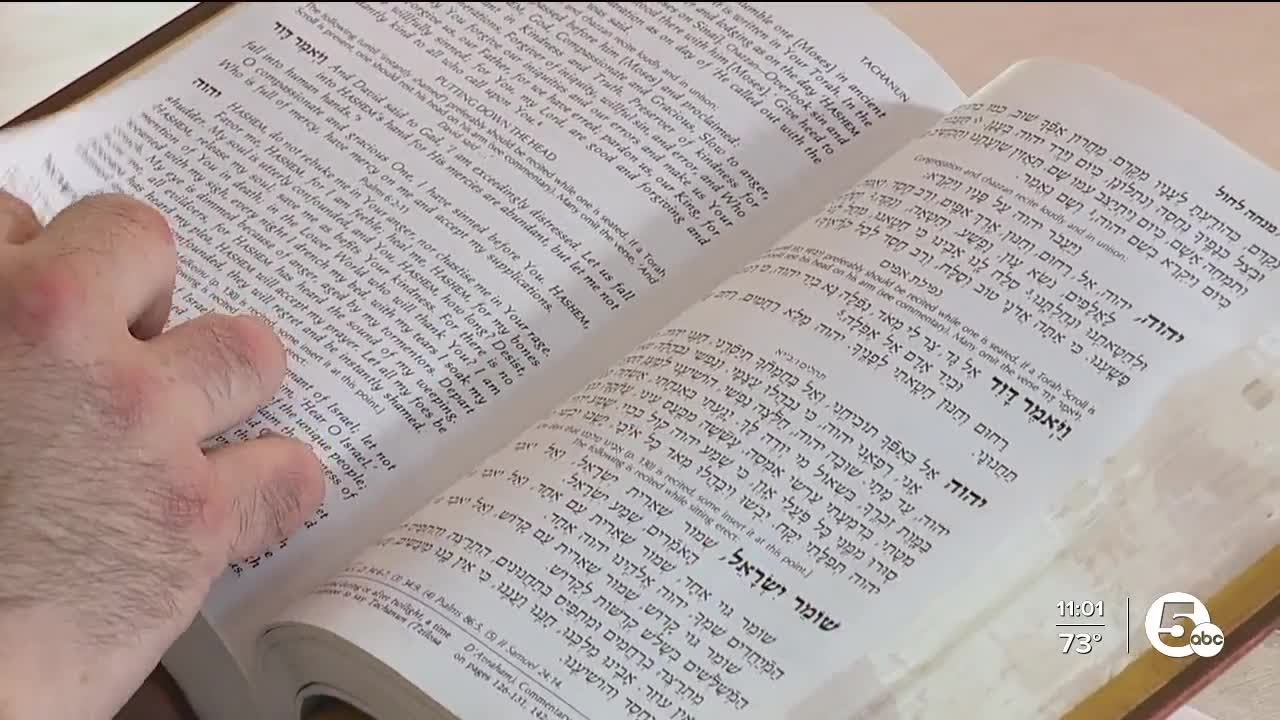
Daniel Grand is an Orthodox Jew living in University Heights, Ohio — a suburb of Cleveland. Like millions of observant Jews, he observes the Sabbath and Jewish holidays, during which he gathers with fellow worshippers in a traditional minyan: a prayer quorum of ten men.

His living room. Ten men. Prayers that have been recited for thousands of years.

"The City's mayor sent a cease-and-desist letter, forced Daniel through a hostile public hearing process, and then — after Daniel withdrew his application — encouraged neighbors to report any religious activity at his home."

— Summary of Events, Grand v. City of University Heights

The City of University Heights treated Daniel's prayer group as a zoning violation. He was required to apply for a special use permit — a process that subjected his faith practice to a quasi-judicial public hearing, neighbor objections, and local officials who made clear they did not welcome the gatherings.

When Daniel withdrew his application rather than endure further targeting, the mayor's response was not relief — it was escalation. Neighbors were encouraged to report any religious activity at his home. City officials ordered police to spy on Daniel's home. At times, the City left his garbage uncollected. A private citizen was placed under government surveillance for praying.

Daniel filed suit under the Religious Land Use and Institutionalized Persons Act (RLUIPA) and the First Amendment, arguing that the City had imposed a substantial burden on his religious exercise, treated religious land uses unequally, and chilled his constitutional rights through government threats.

The district court dismissed his claims as unripe. The Sixth Circuit affirmed. But the U.S. Department of Justice disagreed — filing an amicus brief supporting Daniel's position that the courts applied the wrong legal standard.

On February 11, 2026, Daniel filed a pro se petition for a writ of certiorari to the United States Supreme Court. The question: whether the First Amendment's chilling-effect doctrine applies when government threats chill religious exercise — or whether courts can turn away such claims on procedural grounds before they are ever heard.

"You don't need a city permit to pray with your friends. Every American has the right to peacefully practice their faith in their own home — and to seek relief from federal courts when government officials interfere."
How We Got Here

January 2021
Daniel emails 12 neighbors about his Sabbath minyan
A private invitation. Ten men. A living room. Prayers that have been recited for thousands of years. He wasn't opening a synagogue — he was praying at home.
January 21, 2021
The Mayor calls. The city says no.
Moments after that private email, Mayor Michael Dylan Brennan personally calls Daniel and tells him he is not allowed to hold any religious gathering in his home without first obtaining a special-use permit. No other gathering type is treated this way.
The Cease & Desist
City sends a formal cease-and-desist letter
The mayor puts it in writing. A prayer group of ten men is classified as a zoning violation. The city demands it stop — or else.
The Hearing
A hostile public tribunal — on video
Daniel is forced to appear before a planning commission and defend his faith practice in front of a packed room of objecting neighbors and hostile officials. Watch the video above and see what government-sponsored religious hostility looks like in practice. He ultimately withdraws his application rather than continue to endure it.
The Surveillance
Mayor instructs neighbors to report on Daniel
After Daniel withdraws, the mayor's response is not relief — it's escalation. Neighbors are encouraged to report any religious activity at his home. A private citizen is placed under community surveillance for praying.
The Rules Change
City moved the goalposts at the last minute
Even as Daniel tried to comply with the City's own process, the City changed its rules at the last minute to ensure he could not obtain the special-use permit needed to host prayer meetings in his home. The target kept moving — by design.
September 2022
Daniel files suit in federal court
After exhausting every other option, Daniel files a civil rights lawsuit under RLUIPA and the First Amendment — pro se, without an attorney. The city has teams of lawyers. He has the Constitution.
District Court
Federal court dismisses without hearing the merits
The district court never asks whether the city was wrong. It dismisses Daniel's claims as "unripe" — a procedural door slam that leaves his rights unaddressed.
March 31, 2025
🏛️ U.S. Department of Justice files in support of Daniel
The federal government formally sides with Daniel. The DOJ argues the courts applied the wrong standard — that each RLUIPA claim must be analyzed individually and cannot be categorically dismissed. This is the executive branch of the United States telling the judiciary it got it wrong.
November 13, 2025
Sixth Circuit affirms dismissal
Case No. 24-3876. The appeals court upholds the lower court — still without ever reaching the question of whether Daniel's rights were violated. The procedural wall holds.
February 11, 2026
Petition for Writ of Certiorari filed — U.S. Supreme Court
Daniel takes his case to the nation's highest court. Pro se. The question: can the government chill your religious freedom through threats — and then have courts refuse to hear your case because you didn't suffer enough yet?
April 10, 2026
📣 9 Amicus Briefs filed — 52 organizations in support
In an extraordinary show of support, 52 religious liberty organizations, Jewish advocacy groups, constitutional scholars, and civil rights coalitions file amicus briefs urging the Supreme Court to take this case. The American Center for Law & Justice, Agudath Israel of America, the National Jewish Advocacy Center, the Manhattan Institute, and dozens more — spanning the ideological spectrum — stand with Daniel.
NOW — 2026
⚖️ The U.S. Supreme Court has requested a response
This is significant. The Supreme Court does not ask for a response in most cases. By requesting one, the Court signals it is seriously considering whether to take this case. The city of University Heights must now answer — before the highest court in the land — for what it did to Daniel Grand.

View the Live SCOTUS Docket →

The Hearing

Watch What the City Put Him Through

This is the actual planning commission meeting. Daniel Grand — a private citizen who hosted ten men for prayer — was forced to appear before a public tribunal, face hostile neighbors, and defend his religious practice to city officials.

Watch the room. Watch how many people showed up to oppose one man's prayer group. Watch the tone of the officials. Watch what government-sponsored religious hostility looks like in practice.

This is not a zoning dispute. This is what targeted suppression of religious exercise looks like on video.

University Heights Planning Commission Meeting — The hostile special use permit hearing Daniel was forced to attend. This video shows the community opposition and official hostility that constitutes the basis of his First Amendment chilling-effect claims.

The City Targeted a Prayer Group — and Nothing Else

The City of University Heights did not require permits for poker nights. Not for game nights. Not for Tupperware parties. Not for fraternity gatherings. Only one type of gathering triggered the city's zoning enforcement: a prayer group.

Jews and Christians regularly meet in homes for prayer and fellowship — it is a centuries-old practice central to both faiths. One recent study shows that 31 percent of Evangelical Christian churches hold small-group meetings in homes. Daniel's minyan of ten men on the Sabbath was no different in kind. The City decided it was different in law.

The selective enforcement did not stop there. City officials were asked to explain when a social gathering crosses the line and becomes a house of worship requiring a permit. At least one official admitted they weren't sure. No clear standard existed — which meant the standard was whatever officials wanted it to be, applied to whoever they chose. In this case, they chose Daniel.

"The government should be freedom's top defender, not its biggest threat."

The U.S. Department of Justice Took Daniel's Side

⚖️
U.S. Department of Justice · Amicus Curiae Brief · March 31, 2025

In a significant development, the United States Department of Justice filed an amicus curiae ("friend of the court") brief supporting Daniel Grand's position. The DOJ argued that the district court wrongly applied the Williamson County finality requirement categorically across all of Daniel's claims.

"The government should not be able to chill religious exercise through threats and then escape judicial review by claiming the matter isn't 'ripe.' Each claim deserves individual analysis."

— DOJ Amicus Brief (paraphrased)

The DOJ's intervention is significant: it means the executive branch of the U.S. government has formally told the federal courts they are applying the wrong legal standard in religious land use cases like this one.

This is not partisan. This is the federal government recognizing that a local municipality overstepped its authority and that the courts failed to protect a citizen's constitutional rights.

This Is Bigger Than One City

University Heights is not alone. What happened to Daniel Grand fits a documented pattern of government officials using zoning laws to restrict — and in some cases eliminate — religious exercise by people of faith across the country.

In New York, city officials weaponized zoning laws to prevent an Orthodox Jewish congregation from building a rabbinical college. In Maryland, a Pentecostal church faced a near-identical scenario — zoning enforcement wielded not to protect the public, but to target a religious community. In each case, the tool was the same: local land-use law, applied with discretion, against faith.

Zoning laws serve an important purpose. But they are not a blank check for government officials to discriminate against people of faith. When the same laws that permit poker nights and Tupperware parties are used to shut down prayer groups, they have been weaponized — not enforced.

The Supreme Court has an opportunity, in this case, to make clear that religious Americans are not second-class citizens under the law — and that federal courts must be open to hear their claims.

"Jews and other people of faith aren't second-class citizens. Religious freedom is for everyone."

Media & Video

Watch & Listen

Video coverage and interviews will appear here. If you are a journalist or media organization covering this case, please reach out.

Grand v. University Heights coverage
News Coverage
Watch on YouTube — opens in new tab
Planning Commission Hearing
The actual public hearing Daniel was forced to attend — hostile crowd, hostile officials
Cleveland 19 News
"University Heights man accuses city, mayor of violating civil rights" — Sep 2022
Mayor Brennan — The March 23rd Edict
University Heights City Council — Mayor Brennan issues his directive against Daniel's prayer gatherings

Court Documents

Read the Record

These are the actual legal documents filed in this case. Read them yourself and draw your own conclusions.

📄
Petition for Writ of Certiorari
Filed February 11, 2026 with the U.S. Supreme Court. Pro se. Presents the constitutional question to the nation's highest court.
Read Document →
🏛️
DOJ Amicus Brief
Filed March 31, 2025 by the U.S. Department of Justice. The federal government argues the courts applied the wrong legal standard.
Read Document →

9 Amicus Briefs · 52 Organizations

Religious liberty organizations, legal advocacy groups, and civil rights coalitions from across the political spectrum filed briefs supporting Daniel Grand's position at the U.S. Supreme Court.

Pacific Justice Institute
Filed March 18, 2026
Read Brief →
American Center for Law & Justice (ACLJ)
Filed April 10, 2026
Read Brief →
National Jewish Advocacy Center, Orthodox Union & National Council of Young Israel
Filed April 10, 2026
Read Brief →
Agudath Israel of America & Ratio Christi
Filed April 10, 2026
Read Brief →
Advancing American Freedom & Coalition of Organizations
Filed April 10, 2026
Read Brief →
Protect the First Foundation
Filed April 10, 2026
Read Brief →
Religious Freedom Institute & Jewish Coalition for Religious Liberty
Filed April 10, 2026
Read Brief →
Manhattan Institute
Filed April 10, 2026
Read Brief →
U.S. Conference of Catholic Bishops, Assemblies of God & Seventh-Day Adventists
Filed April 10, 2026
Read Brief →

View the complete docket on the U.S. Supreme Court website →

Read the Documents

Press Coverage

In the News

National and international media covering Daniel Grand's fight before the U.S. Supreme Court.

Jewish Telegraphic Agency · Apr 15, 2026
"He was barred from holding Shabbat services in his house. Could the Supreme Court take up his case?"
Read Article →
The Forward · April 2026
"Orthodox groups ask Supreme Court to hear case of Ohio man barred from hosting home prayer services"
Read Article →
Times of Israel · April 2026
"Jewish groups ask US Supreme Court to rule on Ohio man barred from hosting home prayers"
Read Article →
Cleveland Jewish News · April 2026
"Orthodox groups ask Supreme Court to hear case of Ohio man barred from hosting home prayer services"
Read Article →
Jerusalem Post · 2026
"Legal brief filed to support case of Ohio Orthodox Jew banned from holding minyan in home"
Read Article →
Jewish News Syndicate · 2026
"Will the Supreme Court protect Jewish prayer at home?"
Read Article →
The Yeshiva World · Apr 14, 2026
"Agudah Urges Supreme Court to Safeguard Right to Gather For Minyanim in Private Homes"
Read Article →
Matzav.com · Apr 14, 2026
"Agudath Israel of America Urges Supreme Court to Safeguard Right to Religious Gatherings in the Home"
Read Article →
5 Towns Central · Apr 14, 2026
"Agudath Israel of America Urges Supreme Court to Safeguard Right to Religious Gatherings in the Home"
Read Article →
JFeed · 2026
"Supreme Court May Hear Case over Living Room Minyan"
Read Article →
Frontpage Mag · 2026
"Land for Prayer"
Read Article →
Jewish Post & News (Canada) · April 2026
"Orthodox groups ask Supreme Court to hear case of Ohio man barred from hosting home prayer services"
Read Article →
Daily Caller · Apr 19, 2026
"Local Municipalities Weaponize Bureaucracy Against Prayer"
Opinion · Seth C. Oranburg
Read Article →
Sun Sentinel · Apr 20, 2026
"He was barred from holding Shabbat services in his house. Could the Supreme Court take up his case?"
Read Article →

Take Action

What You Can Do

📢
Share the Story
Share this site with friends, family, and community. The more people who know, the more pressure on the courts to do the right thing.
✉️
Contact the Press
Know a journalist? Share this story. Religious freedom cases need public attention to get justice.
⚖️
Know Your Rights
RLUIPA protects religious land use. If your community faces similar targeting, contact a religious liberty attorney.
🤝
Reach Out
Organizations, advocates, and journalists — reach out using the form below. All inquiries welcome.

Press, Legal, & General Inquiries

For press inquiries, legal support offers, or to share this story with your organization, please reach out.